
Delivery and discounts are calculated prior to checkout.
Visit our Garden, DIY & Building Materials Shop
- Mon-Fri: 7:00am-5pm
- Sat: 7:30am-12:00pm


Your local supplier of ready mixed concrete

Seven Fun Facts About Christmas Trees

It’s that time of year when Cambridgeshire families are thinking about buying and decorating their Christmas trees. There’s something magical about buying a real tree and getting the whole family involved in decorating it. Real trees have been popular for centuries; not only for their appearance, but for the amazing fragrance that they bring into the home. So, to get you into the festive spirit, here at Madingley Mulch we’ve put together seven facts about these popular decorations.
Christmas trees for sale Cambridgeshire – To buy Nordmann Fir and Norway Spruce trees from Madingley Much today, just click on the link above.
- What Are the Origins of the Christmas Tree?
Its history can be traced right back to ancient times, even before the time of Christianity, when people viewed evergreen trees as symbolic in winter and hung branches to ward off evil spirits – a practice that continued through to early Roman times. However, it wasn’t until the 16th century when Christians in Germany began decorating trees in their home that the idea of the Christmas tree was born.
- Where’s the World’s Tallest Christmas Tree?
To date (2015) the world’s tallest land based festive tree is 262 feet tall, 115 feet wide, and can be found at Glorieta de la Palma in Mexico’s capital. It was officially unveiled at a tree-lighting ceremony to music, which was attended by the mayor in November. Around 200 people were involved in decorating the gigantic tree, which has made it into the Guinness Book of Records.
- Which Country Had the World’s Most Expensively Decorated Tree?
In 2010 a tree in The Emirates Palace Hotel, Abu Dhabi, United Arab Emirates, hit the headlines as being the world’s most lavishly decorated tree. The 43 foot tree was decorated with 181 pieces of precious gems, worth a total of $11 million, including diamond necklaces, bracelets and pearls.
- Where’s Europe’s Most Iconic Christmas Tree?
One of the most impressive real Christmas trees can be found in Dortmund, Germany. The 145 foot ‘tree tower’ is made up of as many as 1,700 spruces arranged in a tree-like shape. It is decorated with lights and candles and takes pride of place at the annual Christmas Market, one of the most popular in the country.
- Which Country Has a Floating Christmas Tree?
The world’s largest water-based tree is 278 feet tall and can be found floating on the Rodrigo de Freitas lagoon, in Rio de Janeiro. This breath-taking Brazilian festive spectacular is lit up by more than 3 million lights and has been mentioned in the Guinness Book of Records.
- Where’s Britain’s Tallest Tree?
The UK’s tallest living festive tree is a giant redwood that stands 110 feet tall and can be found at Wakehurst Place, West Sussex. The tree, which is well over 100 years old, has been decorated with as many as 1,800 lights and, because of its close proximity to Gatwick Airport, it can be used as a beacon for planes coming into land.
- What’s the UK’s Most Popular Type of Christmas Tree?
Two of Britain’s most popular Christmas trees for sale are the family-friendly Nordmann Fir and the fragrant Norway Spruce. The good news is that both of these tree types are available to buy in Cambridgeshire, in sizes 3-15 feet, from Madingley Mulch Garden Supplies, Coton.
Madingley Mulch – Contact us today to stock up on your high quality real Christmas trees in time for the festive break.
9 Pretty and Practical Uses for Decorative Slate Chippings
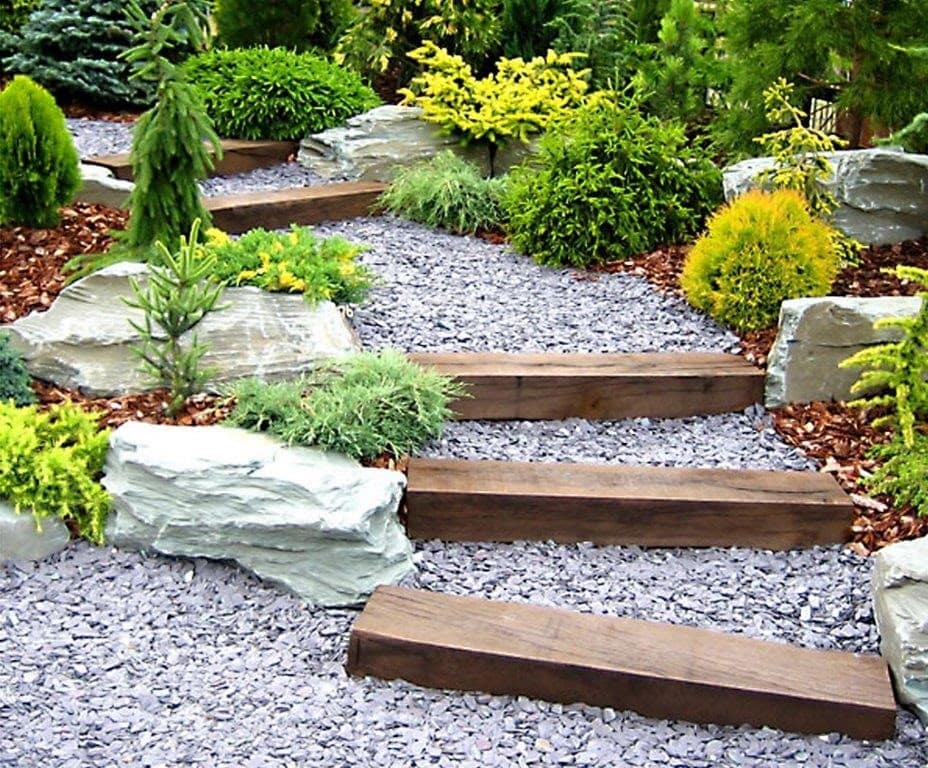
Decorative slate chippings are one of our most popular garden products – and for good reason! Not only do they make an attractive feature, but they offer value for money and are highly versatile, so they can be put to good use in a myriad of ways in outdoor spaces of all kinds. Here are nine practical and decorative uses for slate chippings that you might want to try out in your own garden.
1. Borders Between Lawns and Fences
Coloured gravel is frequently used to create an appealing, contemporary border between lawns and fences – and it has the added benefit of reducing the time spent mowing and strimming the edges of your lawn. Green slate is the ideal choice for a border as it coordinates well with the colour of grass, creating a modern, uniform look to your garden. A top tip is to make the border about eight to twelve inches wide, allowing for the mower to mow right to the edge of the grass. We also suggest that you layer your chippings significantly below the level of the grass, so you can push your mower safely over the edge with ease, without catching the gravel.
2. Quick and Easy Pathway
Garden slate chippings are a quick and easy solution for unsightly walkways; it also softens the look of a garden and adds colour. Use slate to cover broken concrete, tarmac, or a worn, bare earth path across a garden. An eye-catching, modern path will add to the design of your garden and will improve access to key areas such a pond, greenhouse, shed, summer house, garage or workshop. Slate can also be used to create pretty pathways leading from the home to the garden gate.
3. Pot and Planter Cover
Garden chippings can be used to cover bare soil to improve the appearance of pots and planters. They have the added benefit of preventing weed growth and helping the soil to retain moisture in summer. Here at Madingley Mulch, Cambridgeshire, we sell various colours including blue, green or plum slate chippings in 20mm or 40mm sizes.
4. Flower Beds and Shrub Borders
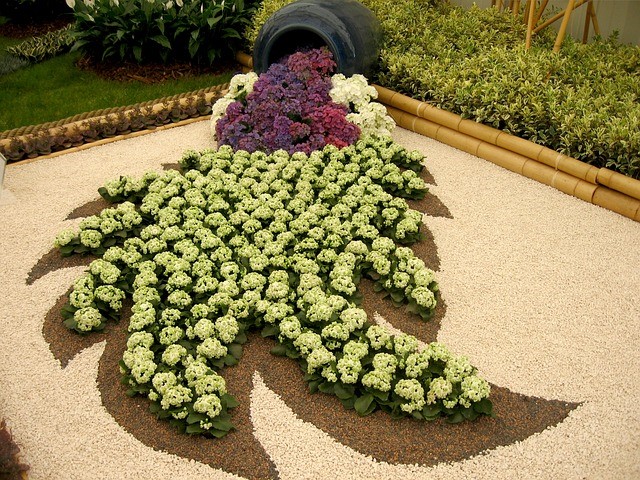
Chippings be used in a similar way to the above for shrub borders or flower beds. It provides an attractive, low maintenance solution by suppressing weeds and maintaining moisture during the hottest months of the year. If you are the creative type and have time on your hands, you can even use chippings to make flower beds or displays with more elaborate designs (such as the one pictured above).
5. Cat and Fox Deterrent
A lesser known use for garden chippings is to provide a solution for gardeners who want to deter cats or other animals from using their garden as a toilet and to prevent general, unwanted digging. If you are buying from us for this purpose, we suggest using larger (40mm) chippings as these are heavier and more difficult for animals to dig up compared to smaller slates.
6. Temporary Landscaping
If you don’t have the budget for permanent hard landscaping but want to get creative, chippings offer a variety of ways to do this. It allows you to experiment with form as you can use stones, slate or gravel to create shaped paths or flower beds such as circles, ovals or curves. If necessary, slate chippings can be easily removed or placed elsewhere in the garden in the future when you’re ready for something more permanent or if you just want a change of look.
7. Creative Features
Decorative chippings can be used in a variety of ways to add beauty to your garden. For instance, it can be used in water features (the water really brings out the colour of the slate), or you can combine it with paving slabs, sleepers, large rocks or other hard features. If you do combine slate with large rocks and stone, this can create a beautiful multicolour effect. The chippings fill the gaps around the larger stones (such as our large 100-150mm cobbles or 50-80mm rainbow cobbles), instead of leaving space in-between.
8. Create Contrast in a Minimalist Scheme
The problem with a minimalist garden is that it can easily look a bit bland. Using contrasting slate around shrubs and other plants helps to create more visual variety. One idea is to surround your ornamental trees or hedges with plum slate to add colour and interest to your garden.
9. Add Texture to Hard Landscaping
Even in a hard landscaping scheme it can be a challenge to stop everything looking a bit too regimented. Adding areas of slate chippings – either at the edges of a garden, or to create a feature in its own right – can break up the look and add a more organic feel; even if there is little or no planting. It may also help bring down the cost of a mainly hard landscaping project.
Decorative Slate Chippings – Click on the link to see the full range of products from Madingley Mulch, Cambridgeshire.
Ten Common Questions About Mulch
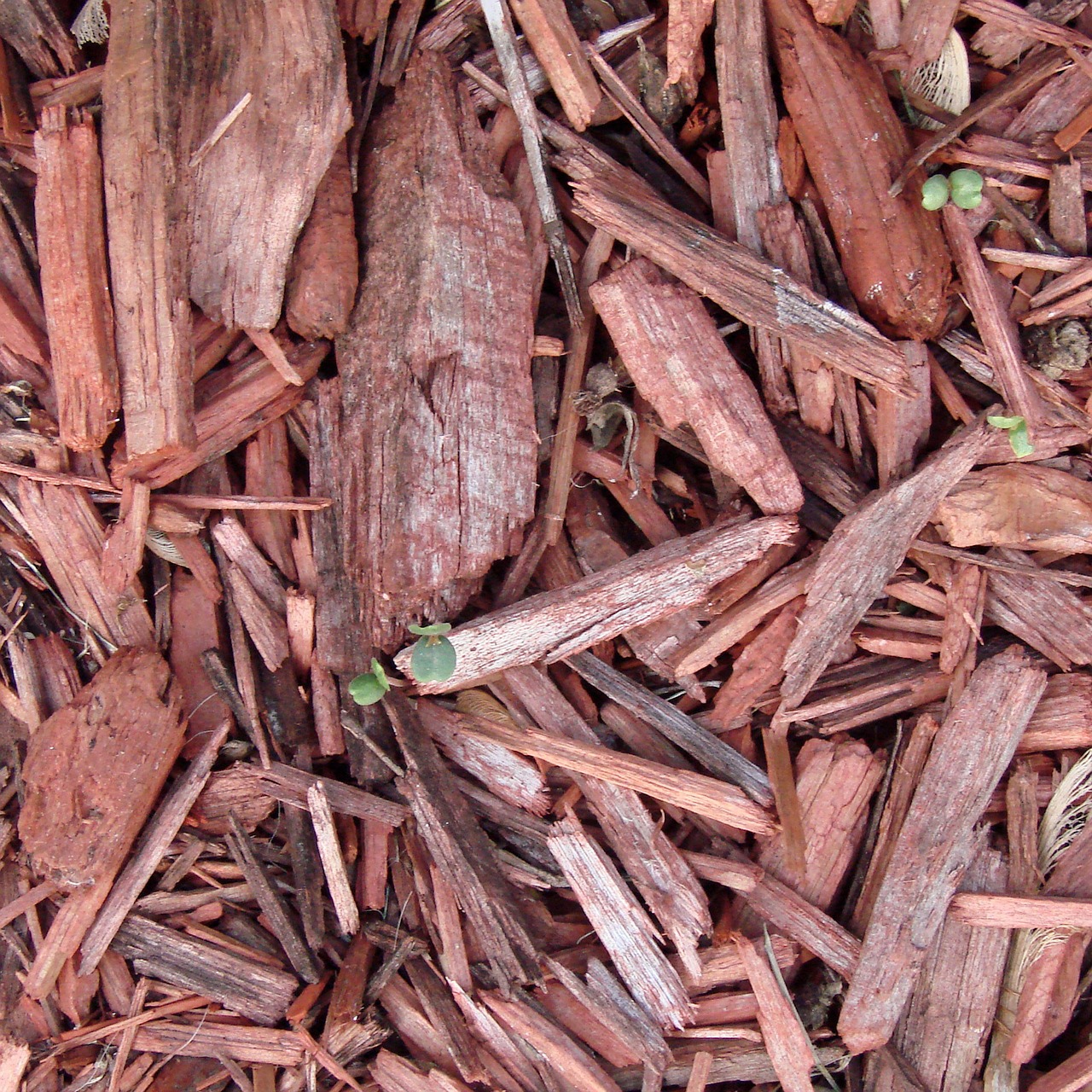
As garden mulch suppliers, here at Madingley Mulch, Cambridgeshire, we sell a variety of mulches for gardeners and landscapers including pathway chips, rustic and decorative mulch. Here we answer ten common questions that are often asked about this must-have gardening product.
What is Mulch?
Mulch is a layer of organic or inorganic material that is placed on top of garden soil, around trees, bushes and plant beds. It can also be used as a surface for walkways and pathways, and as a substitute for turf.
How Does it Benefit My Garden?
Mulch has numerous benefits, which is why it is so popular with keen professional and amateur gardeners alike. You can find out more about the advantages of using mulch from our blog ‘Ten Benefits of Using Mulch’. but the key benefits are:
- It helps keep the soil moist by creating a protective barrier from the sun’s rays, therefore reducing evaporation.
- It is a great timesaver as it reduces the need for weeding.
- It looks fantastic, adding texture and contrast to your garden.
- Organic mulch helps fertilise the soil as it decomposes.
- It protects the soil all year round and in all weathers including during temperature extremes.
- Mulch improves aeriation.
- It attracts earthworms which helps reduce soil compaction.
What is Organic Mulch?
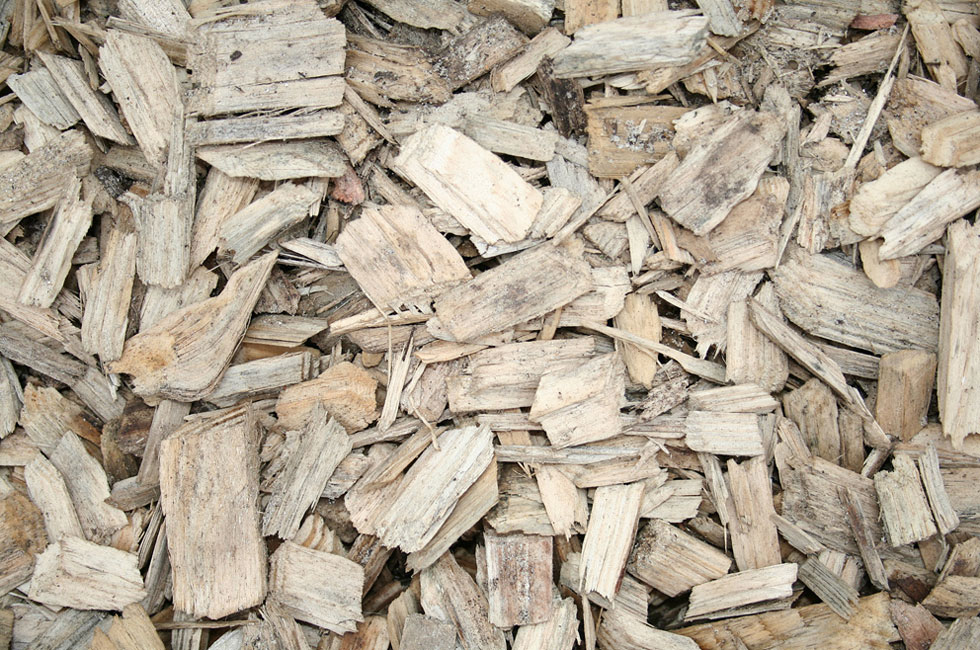
Organic mulches are mulches that break down over time, such as bark or wood chips. As it decomposes it benefits the soil by adding more nutrients and improving drainage. However, as this type of mulch is organic it needs to be replenished, and as a rough guide this should be done once every two to three years.
What is Inorganic Mulch?
Inorganic mulch is mulch that doesn’t break down over time, such as stones, pebbles and slates. It can’t be used as a fertiliser but is usually superior at stopping the weeds as long as it is laid at a suitable depth.
Will Mulch Improve the Look of My Garden?
Yes, mulch is also used by gardeners for decorative purposes as it gives borders and pathways a neat and uniform appearance. Mulch can also add colour and interest to a garden as there is a wide range of colours and textures available, particularly in inorganic mulches.
How Does it Help Maintain Soil Moisture?
It keeps the soil cool in summer, so it helps prevent the sun from drying it out. And, on frosty days or cold winters it provides a layer of insulation.
How Much Mulch Shall I Apply?
Garden mulch suppliers Madingley Mulch advise that if you are using mulch, the trick is not to apply too thick a layer. This is because too much mulch forms a barrier, preventing water from penetrating it and it also stops the air getting through, which worsens the condition of your plants and can cause root rot. A top tip is to not use more than an inch of mulch on newly planted bushes or trees and to use about two to three inches of mulch around flower beds and more established trees and shrubs.
What Happens if I Pile it Against a Tree Trunk?
Although it can be tempting to do this, it’s best avoided at all costs. This is because mulch piled high will retain more moisture and if the trunk of the tree remains wet (due to piling) it can cause root rot. Piles of organic mulch can also be a magnet for rodents of all kinds who may seek refuge in the mulch and attack the bark. To prevent this, spread the mulch several inches away from the base of the tree.
Do I Water Bark Mulch?
Newly spread bark mulch needs to be watered as soon as possible. This is because the way the mulch is stored at the depot means it can reach quite high temperatures. If the mulch is removed from the bag and spread on your flower beds, then left to dry out, it can attract fungi which makes the surface water resistant. To prevent this it is advisable to give your newly laid mulch a good watering.
Do I Still Need to Weed a Mulched Area?
Mulch helps prevent weeds, but it doesn’t stop weeds growing entirely. You’ll still need to pick over your flower beds a couple of times a year, and it may be worth raking the mulch up a bit at the same time to maintain its appearance.
Garden Mulch Suppliers – Click here to see our full range of organic and inorganic mulch from Madingley Mulch, Cambridgeshire.
Four Inspirational Garden Ideas for 2015
If you have been inspired by the Royal Horticultural Society’s world renowned Chelsea Flower Show, now may be a good time to take a look at your garden and think of creative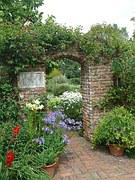 ways to revamp your outdoor space. Whether you have a small back yard, a tiny front garden or extensive grounds, the Chelsea Flower Show is a fantastic source of inspiration on how to transform even the smallest of outdoor spaces into a tranquil haven. In this article, Madingley Mulch, who provide an excellent range of landscaping products in the Cambridge and East Anglian region, reveal four imaginative garden ideas inspired by the show.
Courtyard Gardens
Courtyard gardens have an appeal the world over, and featured in this year’s Chelsea Flower Show when Claire Austin won gold for her Modern Iris Garden, which depicted a courtyard design around an olive tree. Courtyard gardens offer a great deal of flexibility and ideas range from creating an outdoor eating area to designing a small, tranquil seating space. Growing climbing plants, or having a few hanging baskets or planters containing vibrant blooms or greenery will add a pop of colour; and a courtyard with a central focal point such as a fountain or sculpture is also popular. To help you design the perfect courtyard garden, Madingley Mulch provide paving in a variety of colours from Indian sandstone to weathered slabs, textured slabs and natural stone paving.
Contemporary Garden
Only your imagination is the limit with a contemporary garden as almost anything goes, from minimalist outdoor spaces, to shaped lawns, pathways, patios, steps and hedgerows, and featuring focal points such as sculptures, fountains and ponds. The trick is to introduce clean lines and bold geometric shapes to make an impact. One of this year’s contemporary garden winners was Darren Hawkes with his award winning Brewin Dolphin Garden. It included dramatic handmade monoliths created from thousands of slate tiles. While this may be too time consuming for the amateur gardener to re-create, there are lots of ways to revamp your outdoors such as designing shaped pathways with mulch, bark, slate or decorative stone.
Cottage Gardens
The Cottage Garden is quintessentially English and is thought to have had its origins in the Elizabethan era when gardens were designed to grow herbs or fruits, and had occasional lifestock such as sheep or pigs. Now cottage garden ideas have extended to include benches, hidden pathways, archways, wild flowers, pagodas and occasionally a well, although strictly for ornamental purposes. Last year’s big attraction at the Flower Show was The Peter Rabbit Herb Garden which brought Beatrix Potter’s books to life. Although creating a similar garden in your own home is clearly an ambitious task, a simple cottage garden with flower beds, wild flower zones, vegetable plots and herb gardens, will provide you with just as much satisfaction. Madingley Mulch sells a wide range of soil, conditioners and compost to help your plants grow including our own special recipes Tony’s Tonic and Denise’s Delight, which has proved a popular choice with gardeners.
Tranquil Garden
The tranquil garden is becoming increasingly popular and, if inspired by the orient, they often feature ornamental raked gravel, topiary, walkways, a small pond, a Buddha and a seated area for quiet contemplation. At last year’s show ‘The Telegraph Garden’ was a tranquil space created by designers Tommaso del Buono and Paul Gazerwitz. However, instead of a Japanese Zen garden, the garden featured a contemporary Italian design incorporating symmetry for harmony. Within the garden were roof trained lime trees placed the same distance apart, a water wall, perfectly manicured rectangular lawns, clean pathways and immaculately cut hedgerows. Symmetry helps create a peaceful environment and can be achieved even in the smallest of gardens. If rectangular lawns are a feature of your tranquil garden, Madingley Mulch sell high quality turf to help you achieve your dream outdoor space.
Click on the link to see the full range of garden supplies from Madingley Mulch
Seven Ways to Transform Your Garden this Spring
 Spring is a time for new beginnings, and what better way to kick-start the season than getting your garden in shape? Gardening reaps a multitude of rewards: it is not only proven to improve health and happiness, but it inspires creativity and gives you the satisfaction of creating your own outdoor haven. In this article, Madingley Mulch, providers of garden supplies in the Cambridgeshire and East Anglia region, gives seven ideas on how to transform your garden this spring.
Replacing Fencing
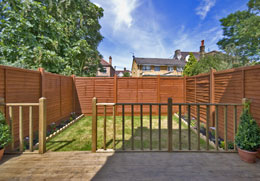
Spring is the season to get all those tasks done that you have put off during the winter months. One of those jobs that will give your garden an instant makeover is to repair or replace wooden fence panels or posts that have been damaged in bad weather or rotted over time (as no matter how much effort you are prepared to put into your grounds, just one broken fence panel will blight the look of your plot). Not only this, a new fence looks neater, improves security and privacy, keeps pets in (or out), and keeps boundaries neatly defined.
Installing Patios
One way to get your garden in shape this spring is to build a patio; this makes your garden more practical as it creates an instant dining area, which you can use as an extension of the indoors during the summer months. From traditional gardens, to Mediterranean inspired land, or rustic grounds, we have paving slabs to suit. Our high quality patio slabs will instantly transform a space and improve the practicality of your garden. Among the many options are antique style courtyard paving, contemporary slabs, and the increasingly popular Indian sandstone, which is an attractive form of paving that provides a low cost alternative to Yorkshire stone.
Improving Pathways
A pathway adds instant beauty to your garden, and there are a number of options available to make your garden stand out above the rest. Paving stones placed like stepping stones across your lawn is a quick and economical way to make a path. However, more contemporary options are available such as pathway mulches (which are soft to walk on), or decorative stones, which have the added bonus of alerting you to visitors. To give stone pathways a more contemporary look, use pebbles, stones or slate chippings as edging.
Laying Good Quality Turf
Whether you have a new garden or old grass in need of a revamp, laying high quality turf is an instant way to create a new lawn. Although it is more costly than laying a lawn from seed, the benefit is that it produces fast results as you can use you new lawn within 14 to 21 days. This job is best done in early spring or late autumn when your new lawn barely needs mowing. If you are lay turf in the warmer weather, either in late spring or summer, your lawn will need constant watering.
Boosting Your Soil
If you have poor quality soil which is low on nutrients this won’t do much for your plants or vegetables. Alternatively, if you are planting new beds you may want to give your plants a great start. We supply bags of soil, including top soil, or soil with conditioners added, to improve plant growth. Perfect for vegetable patches or raised beds, Denise’s Delight is unique to Madingley Mulch and consists of a combination of fen soil, horse manure and wood shavings. And, among our variety of soil conditioners and composts is our own brand, Tony’s Tonic, for deep soil conditioning.
Using Wooden Sleepers
Wooden sleepers are extremely versatile and can be used in a variety of ways to enhance your garden. Popular uses are to create raised flower beds, herb gardens, fruit or vegetable patches. However, they can also be used to build contemporary wooden pathways, timber flower boxes, or compost heaps. Click here to order railway sleepers or reclaimed sleepers.
Madingley Mulch sell all the garden products listed above, plus associated outdoor and DIY products to keep your outdoor space in tip-top shape. We make the ordering process easy for you as we can deliver straight to your door, and offer free delivery within 15 miles of our depot including in the Ely, Newmarket, Huntingdon, Cambridge, Royston and Saffron Walden areas.
Ten Benefits of Using Mulch
 Mulch isn’t essential for a healthy garden; however, it brings so many benefits that many gardeners wouldn’t be without it. In this article, established garden mulch suppliers Madingley Mulch explore ten advantages of its use.
Cuts Down the Need for Weeding
Mulch saves time for gardeners as it reduces weed growth. To make it effective for this purpose, however, it is important not to spread the mulch too thinly. As a rough guide small chips, such as decorative mulch, should be layered one to two inches deep, and this should be double the depth for larger chips.
Protects in All Weathers
The great British weather can be frustrating for gardeners as it’s hard to predict what it will do next. It is not unheard of to have rain, hail, sunshine and wind – all in the space of 24 hours. Mulch provides a protective layer that will guard against these temperature extremes. It’s best to apply it in mid-spring, however, as any earlier could prevent the soil from warming up.
Reduces the Need for Watering
Another way mulch benefits gardeners is that it reduces the need for watering, which is particularly beneficial during droughts and hosepipe bans. It increases the ability to hold water in certain types of soil, such as sandy soils, and prevents soil evaporation – in some cases by as much as 50 per cent. If you are applying mulch around new plants, a top tip is to make sure they are well watered first.
Frees up More Time
Another bonus of mulching is that you don’t have to mow the edges around trees, bushes or flower beds, which is another time saver. Digging a trench between the grass and the mulch looks neater and makes it easier to mow the lawn. Our rustic mulch is the recommended choice around trees and bushes.
Conditions the Soil
Mulch is a popular garden buy as it is a natural product that breaks down over time, nourishing the soil with organic material. Bark mulch can be used around trees, shrubs, fruit and perennials (plants that live more than 24 months) where it can be left undisturbed. It is best not to use it around vegetables as the soil in this area needs more cultivation and so will be disturbed more frequently.
Creates a Habitat for Micro-Organisms
Bark and wood mulch create food for worms and micro-organisms, so they thrive. These micro-organisms benefit plants as they help to loosen the soil which enhances the flow of water and air, stimulating root growth. It is important to place the mulch on top of the soil, rather than mix it within the soil, or it will disrupt the soil nitrogen which has a negative effect on plant growth.
Looks Attractive
Mulch looks attractive and gives gardens a more polished appearance. The trick is not to pile the mulch above the lawn or pathway as it can blow onto these areas and affect the appearance of your garden. Instead, the soil level should be below the lawn or pathway, and levelled with the mulch, or better still, build a trench between the soil and lawn edge to create a raised bed effect.
Has Multi-Purpose Use
Mulch is not just used around plants, it can also make attractive walkways for parks, gardens and recreational facilities. Again, it is important to have a defined pathway edge so the chips don’t scatter over the lawn and spoil the definition. As garden mulch suppliers we recommend our pathway chips for walkways.
It’s Economical
We sell a host of different mulches, but one of the bonuses of bark mulch is that it breaks down much slower than wood chips. Bark mulch only has to be replenished every two to three years, which saves money in the long run as it doesn’t have to be topped up so often.
Mulches have a Cushioning Effect
Dense or compact earth has a negative effect on plant growth as it reduces soil productivity and plant growth. However, mulch serves as a barrier when walked on and minimises soil compaction around your plants, particularly when the soil is wet. And, it helps prevent muddy boots too!
For more information and advice about mulches, or to order, contact Cambridgeshire based Madingley Mulch direct on 01954 212144, or click on the link above.