
Delivery and discounts are calculated prior to checkout.
Visit our Garden, DIY & Building Materials Shop
- Mon-Fri: 7:00am-5pm
- Sat: 7:30am-12:00pm

Your local supplier of ready mixed concrete

How Can You Deter Weeds Found in Clay Soil?
This blog looks at the weeds you commonly find in gardens which are rich in clay soil, and what you can do to deter them. One of the more organic solutions is to use a soil conditioner or mulch, so there’s a section on the products that Madingley Mulch supply.
The article will take around three minutes to read.
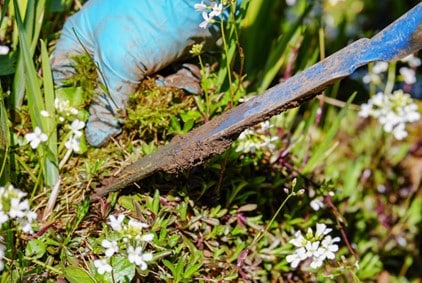
One of the big problems that every gardener faces is weeds – they look unsightly on your lawn or flower bed and deprive the plants you do want to grow of valuable nutrients. Most of the soil in the Cambridge area, and across the East of England, is rich in clay. Here we look at the weeds which flourish in this type of soil, and what you can do to get rid of them.
Madingley Mulch – Bark Mulch Suppliers in Suffolk
At Madingley Mulch, we supply a range of mulches and soil conditioners to help eliminate any weed problems you have in your garden. Call us on 01954 212144 to learn more.
Common Clay Soil Weeds in Cambridgeshire and East Anglia
Plantain – this is a very stubborn weed with a long taproot that thrives in heavy, compacted and wet clay. It comes in two forms – Greater and Ribwort.
Couch grass – also known as Quack Grass, this creeping, persistent perennial thrives in heavy, damp clay soils.
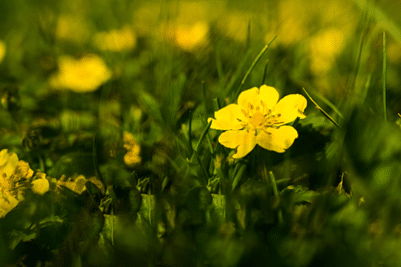
Creeping buttercup – the presence of this weed, above, often signals poor drainage and heavy soil.
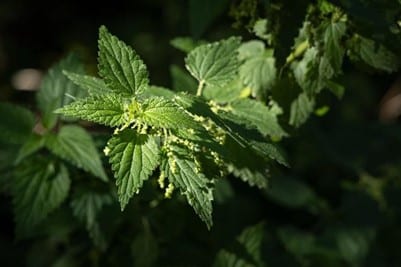
Stinging nettles – most people will be familiar with this plant, above, as they will have been stung at least once in their lives. It thrives in rich, high-nutrient clay soil.
Dandelions – these are also widely known and easily recognisable. These tough, deep-rooted weeds can break through hard, packed clay soil.
Japanese knotweed – this is a highly destructive plant due to its rapid growth, ability to cause significant structural damage to buildings, and capacity to destroy local biodiversity. It’s also very hard to get rid of completely.
Getting Rid of Weeds – the Natural Approach
Using weedkillers is not recommended; apart from damaging other plants (and other wildlife) which you may wish to protect, the chemicals they contain could also be harmful to human health. Weedkillers also contribute to surface and groundwater pollution through spillage, incorrect disposal and natural runoff. They also have a large carbon footprint from their manufacture, packaging and transportation.
It’s much more environmentally responsible – and safer – to remove the weeds either by hand or with an appropriate tool. Hand-pulling, using a hoe, or using a hand fork to remove the entire root system, is crucial to prevent regrowth. However, you will need to do this regularly and thoroughly for it to be effective.
You should be thinking about manual weeding in the next month or so, as early spring is one of the best times to remove any unwanted plants. They are actively growing but still young, making them easier to remove, particularly after rain, as the soil will be damp.
Lay Down Some Membranes…
An even better way of solving any weed problem you have is to attack it at source – prevention is better than cure. Weed suppressing membranes will stifle any unwanted invaders before they can break through. (For more information on their advantages, check out our previous blog post here.
We stock Groundtex, a heavy-duty weed membrane, at our Cambridge base. This should deter the strongest of weeds, and you can also buy fixings from us to help keep it secure. Neither of them will damage the soil’s structure.
…and Some Mulch
Another way of suppressing weeds is to lay down some mulch on the surface of your soil. This should cut out some of the regular hand-weeding you have to carry out. At Madingley Mulch we stock a selection of mulches (along with our soil conditioners and composts) which will deter them by blocking sunlight, preventing their seeds from germinating and emerging.
A two- to three-inch layer will act as a physical barrier that smothers existing small weeds, reduces seed-to-soil contact, and keeps the soil surface dry, making it difficult for new weeds to take root.
Mulches, Soil Conditioners and Composts from Madingley Mulch
We can cater for all your needs when it comes to improving your soil. As leading bark mulch suppliers in Suffolk, Herts, Bedfordshire and our home county of Cambridgeshire, we have a range of soil options depending on your needs.
Our mulches include decorative and pathway varieties, so they will look good as well as being functional. We also stock a variety of conditioners and composts, including our exclusive products Tony’s Tonic and Denise’s Delight, both of which are rich in manure and other plant nutrients.
If you have any questions before you place your order, call us on 01954 212144, and we will be happy to help.
FAQS:
Q: How can you check your soil type?
A: To check your soil type, carry out what is known as a soil ribbon test by moistening a handful of soil and rolling it into a ball or cylinder to check if it’s sticky (likely to be clay-heavy), gritty (sand-heavy), or crumbling (loam-heavy). You can also buy DIY testing kits, which will measure your soil’s acidity or alkalinity.
Q: What should you do if your soil isn’t heavy in clay?
A: If you think your soil isn’t particularly clay-heavy, then read our previous blog here. This lists the other main soil types in the UK, what you can grow in them easily, and how you can improve them.
Q: Can you deliver my order?
A: Yes, we will be happy to deliver your order; there is a sliding scale of charges depending on how close you live to our base. There is a minimum order requirement of £50. For more information, check out our deliveries page.
Back to blog