
Delivery and discounts are calculated prior to checkout.
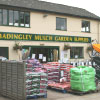
Visit our Garden, DIY & Building Materials Shop
- Mon-Fri: 7:00am-5pm
- Sat: 7:30am-12:00pm


Your local supplier of ready mixed concrete

Five Key Gardening Jobs for Easter
Article Synopsis
This article looks at five key jobs you should be looking to prioritise over Easter – ranging from planting to painting and general maintenance.
One of these is to improve your soil’s fertility, so there’s a rundown of the soil conditioners, mulches and composts offered by Madingley Mulch.
This article will take around three minutes to read.

Easter should be the ideal time to spring into action, at least as far as your garden is concerned. The longer days and the extended holiday period should give you plenty of opportunity to clear up your outdoor space after winter – and to identify some key jobs to tackle which should stand you in good stead in the months ahead.
Madingley Mulch have identified five key tasks which should be top of your list of priorities.
Spent Mushroom Compost in Suffolk from Madingley Mulch
At Madingley Mulch, we supply many different types of soil conditioners and composts across East Anglia – so if you want lawn top dressing mix in Bedfordshire, mulches in Essex or wood bark in Cambridge, we are the people to call. You can check out our online shop here. You can either collect your order in person from our base on the outskirts of Cambridge, or have it delivered to your door.
- Plant Your Potatoes
Traditionally, Easter – and more specifically Good Friday – was the time to plant potatoes. There are religious reasons for this – Catholic traditions involved planting on this day to “baptise” the vegetables, often accompanied by sprinkling Holy Water on the soil to prevent blight.
However, there are plenty of other reasons to plant your potatoes now. Good Friday usually falls in late March or early April, making it a reliable, temperate time to start early potato crops, as the soil is usually workable (moist enough to dig up, but not waterlogged). This year, you will definitely benefit from the onset of spring and the clocks going forward on March 29, so you should have more daylight hours to work in.
- Sow Other Hardy Annuals and Vegetables
It’s not just potatoes which should be sown in early April or over Easter. The holiday period gives you the ideal opportunity to sow hardy annuals (such as cornflowers) for summer colour, and vegetables like carrots, lettuce and beetroot.
You can also start growing tomatoes, cucumbers and peppers, although you should start these indoors or under cover, ideally in a greenhouse.
- Sort Out Your Structures
After winter, Easter is a good time to look at some of your garden’s fixtures and fittings. Check on the condition of any fencing and trellises – they may need a fresh coat of paint or varnish, or some more radical repairs such as fresh panels and posts. You should do it now before any surrounding or adjacent plants get too big and you can’t find your way in!
- Cut Your Lawn
Over Easter, you should focus on reviving your lawn after winter by clearing debris, performing the first high-cut mow, and applying a spring fertiliser. Key tasks also include aerating to fix soil compaction, lightly scarifying to remove moss, and repairing any bare patches with grass seed.
The first cut of the year should be a relatively light one, as cutting it too short damages the grass, weakening it and leaving it vulnerable to disease and pests. Equally, a gentle first trim stimulates growth, helps the soil retain moisture and protects grass roots from any early spring temperature fluctuations.
- Tidy and Mulch Beds and Borders
You should also be looking to tidy up your beds and borders (as well as your lawn) over Easter. So clear away dead winter foliage, rake up the debris, and apply a layer of compost, mulch or some form of soil conditioner to suppress weeds and retain moisture.
You shouldn’t put your mulch or compost directly up against the plant’s roots, as this could weaken the stem and inhibit future growth. The mulch itself should be laid evenly to a thickness of between two and three inches (5cm-7.5cm).
For more information about what to do (and what not to do) with your mulch, see our previous blog post here.
Soil Conditioners and Composts from Madingley Mulch
All our various soils, conditioners and composts can be found here. We stock two exclusive products in Tony’s Tonic and Denise’s Delight; you won’t find these anywhere else. Their mix of plant nutrients (particularly manure) means that plants should survive and flourish in the most unpromising of soils.
We can deliver your order wherever you live in East Anglia; we operate a sliding scale of charges, so the closer you live to Cambridge, the cheaper it will be. The minimum order to qualify for our delivery service is £50. For more details, check out our deliveries page here.
If you have any questions about any of our products or delivery services, you can call us on 01954 212144 or email shop@mulch.co.uk.
FAQS:
Q: What’s the difference between scarifying and aerating?
A: Scarifying removes surface thatch – a layer of dead grass, stems, roots and moss. You can do this with a rake (ideally a spring-tined one) or a mechanical scarifier.
Aerating involves punching small holes in the soil to prevent compaction and ensure that water and nutrients can get to the grass’s roots. You can do this with a garden fork, although you may need a specialist machine if you have a larger lawn.
Q: Why is spent mushroom compost so good for the soil?
A: Spent mushroom compost, which you can find in many of our soil products, adds organic matter to the soil. It breaks up heavy, compacted clay soils (extremely common in the East of England) and acts as a mulch, suppressing weeds while retaining moisture.
It gets its name from its source – it’s a by-product of mushroom farming.
Q: Do Madingley Mulch have items on special offer?
A: Yes, these can be found here. It’s worth checking this page regularly as we are constantly adding new products. We also have a clearances page where some of our stock is being sold off at half price.
Back to blog