
Delivery and discounts are calculated prior to checkout.
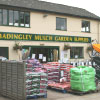
Visit our Garden, DIY & Building Materials Shop
- Mon-Fri: 7:00am-5pm
- Sat: 7:30am-12:00pm


Your local supplier of ready mixed concrete

Maximising Moisture in Dry East Anglian Gardens
East Anglia is one of the driest parts of the UK, and this summer’s hosepipe bans have brought that home for local gardeners. This article looks at how a well-chosen layer of bark mulch, wood chips or aggregates can act as a moisture blanket for your borders, cutting down on how often you need to reach for the watering can.
There’s also a look at how Madingley Mulch’s range of barks, mulches and aggregates can help you whatever the weather throws at it next.
This article will take around three minutes to read.

East Anglia has always been one of the driest parts of the UK, and this summer has driven the point home. Hosepipe bans are currently in force across the Cambridge Water, Anglian Water and Essex & Suffolk Water supply areas. The Environment Agency has confirmed that almost three-quarters of England is currently in drought, and local gardeners are having to rethink how they keep their borders alive.
The good news is that one of the simplest tools for the job – well-laid mulch – is also one of the cheapest.
Bark Mulch in Cambridgeshire from Madingley Mulch
At Madingley Mulch, we supply a wide range of barks, mulches and aggregates from our base on the edge of Cambridge, all of which can help your plants hold onto whatever moisture they have access to.
Give us a call on 01954 212144 or email shop@mulch.co.uk if you would like some advice on which product best suits your soil.
Why East Anglian Gardens Feel It First
Much of the region lies in the rain shadow of higher ground further west, which is one of the main reasons East Anglia is consistently the driest part of the country. Add in sandy, free-draining soils in places and heavy clay elsewhere that cracks and sheds water once it dries out, and it’s easy to see why local gardens struggle the moment restrictions are announced.
This year has been a particularly tough test. Prolonged dry weather since early summer, several heatwaves and record low river flows have pushed water companies across the region into restrictions, with Essex & Suffolk Water introducing its first hosepipe ban since 1997.
Whatever the rest of the summer brings, it’s a reminder that water-wise habits are worth building into your garden routine every year, not just when a ban is announced.
How Mulch Works as a Moisture Blanket
Mulching is one of the most effective ways to reduce how much water your borders lose to evaporation. A layer of organic material – such as bark or wood chips – shades the soil surface, blocking direct sunlight and slowing the rate at which moisture escapes into the air. It also suppresses weeds which would otherwise compete with your plants for what water there is.
According to the Royal Horticultural Society, mulch needs to be at least 5cm (2in) thick to be effective, and ideally 7.5cm (3in) on borders and beds. Wood chippings are made up of larger pieces, so they’re less likely to compact down and can be applied a little deeper still – around 8-12cm (3-5in) – making them a good choice for both borders as well as areas that see heavier footfall like pathways.
Whichever you choose, keep the mulch clear of the base of stems and trunks, as constant moisture against the plant itself can encourage rot.
Getting the Timing Right
Ideally, mulch should go down onto soil that’s already moist – so top up your borders after a good downpour or a thorough watering, rather than laying it onto bone-dry ground where it may simply repel the next lot of rain. Once it’s down, organic mulch will need topping up every two to three years as it gradually breaks down and improves the structure of the soil beneath it.
Aggregates and Other Water-Wise Choices
Mulch isn’t only about bark and wood chips. Decorative gravel and stone chippings work in a similar way, forming an insulating layer over the soil that slows evaporation without breaking down, which makes them a useful, low-maintenance option for gravel gardens, Mediterranean-style borders or anywhere organic mulch isn’t practical.
A water butt is another easy addition, giving you a supply to fall back on when restrictions are in force, and watering deeply but less often – ideally in the early morning or evening – helps roots grow deeper and more resilient to dry conditions.
Bark Mulch and Aggregates from Madingley Mulch
We stock a full range of barks – from composted and premium bark to mini bark chip and landscape chips – alongside decorative gravel, and stone chippings for customers in Cambridge and across East Anglia. In addition, we also supply soil conditioners including our own Tony’s Tonic and Denise’s Delight, both blended in-house to help your soil hold onto moisture and nutrients.
We can deliver your order, with charges now based on a published mileage table, so the closer you are to our Cambridge base, the less you’ll pay; the minimum order value for delivery is £50. For more details, check out our deliveries page, or call us on 01954 212144 or email shop@mulch.co.uk.
Back to blog