
Delivery and discounts are calculated prior to checkout.
Visit our Garden, DIY & Building Materials Shop
- Mon-Fri: 7:00am-5pm
- Sat: 7:30am-12:00pm

Your local supplier of ready mixed concrete

What are the Five Principal Advantages of Grade A Topsoil?
This article looks at Grade A topsoil – how it’s prepared, what you can use it for, and what advantages it offers over other topsoil.
It’s one of the soils, conditioners and composts which are stocked by Madingley Mulch, and there’s a brief mention of their other, similar products.
The blog will take around three minutes to read.
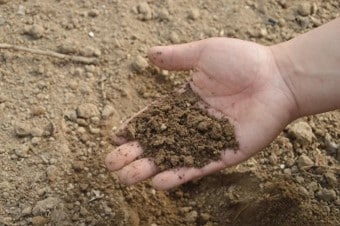
In the world of landscaping, Grade A topsoil is the gold standard. Unlike ‘as-dug’ or ‘economy’ soils, which are often just raw earth taken from construction sites, Grade A has been processed and refined to provide the best possible environment for plants.
Madingley Mulch – Topsoil Suppliers in Cambridge
At Madingley Mulch we stock a range of topsoils – and other conditioners and composts – which you can purchase from our online shop here. You can also buy it from our base on the outskirts of Cambridge, or have it delivered to your door.
How is Grade A Topsoil Screened?
Grade A topsoil is screened by mechanically passing raw soil through a mesh, typically ranging from 10mm to 20mm, to remove stones, roots, sticks, and large clumps of earth. This process creates a consistent, fine-textured loam that ensures even water flow and nutrient distribution.
The soil is often dried first to prevent clogging and may be tested to certify it is free of contaminants and disease. These high levels of quality control are essential as the soil has to qualify for British Standard BS3882 – without it, the soil cannot be classified as Grade A. So what are its advantages over other soil improvers?
- It’s Superior Nutrient Profile
Grade A soil is typically screened and blended to ensure a high organic matter content. It contains the right proportions of Nitrogen (N), Phosphorus (P), and Potassium (K) required for healthy root development in plants.
It also contains beneficial microorganisms and earthworms that help break down nutrients for plants to absorb.
- Its Consistency and Texture
The Grade A designation usually means the soil has been professionally screened, typically to 10mm or 20mm.
This means it is free from large rocks, bricks, and debris that make planting difficult. Another beneficial effect of its fine, crumbly texture makes it extremely easy to rake out, level, and incorporate into existing beds.
- Its Excellent Drainage and Aeration
Because Grade A soil has a balanced structure, it prevents the two biggest killers of garden plants: compaction and waterlogging.
The loose structure allows oxygen to reach your plants’ roots (essential for respiration). It retains enough moisture to keep plants hydrated but allows excess water to drain away, preventing root rot.
- Its Low Numbers of Weed Seeds and Contaminants
While no soil can be guaranteed to be 100% weed-free, Grade A topsoil is managed more strictly than lower grades. Because it is often heat-treated or sourced from clean agricultural land, you won’t find the aggressive perennial weeds (like horsetail or bindweed) often hidden in cheap soil.
It is tested to ensure it is free from heavy metals, glass, or chemical contaminants, making it safe for children’s play areas.
- Its High Success Rates
Whether you are laying expensive turf or sowing delicate seeds, Grade A soil provides the “buffer” needed for success.
When it comes to grass, new turf roots knit into Grade A soil much faster than compacted or clay-heavy ground, helping to produce a healthy, level lawn. You should get a higher vegetable yield if you plant your seeds in this type of topsoil – as with children’s play areas, it should be free of any contaminants.
Your delicate perennials will stand a much greater chance of thriving if the soil they are planted in is Grade A; and you can also use it to infill the last six inches of any unsightly holes you have in your garden.
Soil Conditioners in Hertfordshire and Across East Anglia from Madingley Mulch
Our Grade A topsoil is just one of the many soils, conditioners and composts we stock at Madingley Mulch. We also have a multipurpose top dressing, which is ideal for improving your lawn; spent mushroom compost, which will improve the structure of clay soil (common in the East of England); and Denise’s Delight, an exclusive product of ours which is rich in manure, humus and other plant nutrients.
If you have any questions about any of our products, you can call us on 01954 212144 or email shop@mulch.co.uk.
FAQs
Q: What are Madingley Mulch’s opening hours?
A: Our shop is open Monday-Friday from 7am – 5pm and Saturdays from 7:30am-12 noon.
Q: Can we deliver your topsoil order?
A: Yes, we can. If you can’t make it to our base on the outskirts of Cambridge, we can deliver it to your door. We operate a sliding scale of charges, so the further away you live, the higher the charge, to cover our costs. More details can be found on our deliveries page here.
Q: How deep should I spread my topsoil?
A: The Royal Horticultural Society says that you will need at least four inches (100mm) of topsoil if you are laying a new lawn. For flower beds, this figure increases to eight inches (200mm). Vegetable patches may need even more than that (300mm), or at least 12 inches.
Back to blog