
Delivery and discounts are calculated prior to checkout.
Visit our Garden, DIY & Building Materials Shop
- Mon-Fri: 7:00am-5pm
- Sat: 7:30am-12:00pm


Your local supplier of ready mixed concrete

What Are the Best Plants to Cope with Variable Weather?
Following on from the mix of weather we have had so far this summer, this article looks at the plants which can cope with heavy rain and hot spells.
One of the ways of helping flowers, shrubs and trees to survive these big variations in climate is to add some mulch or compost to the soil, so there’s a look at the various soil conditioners and improvers which Madingley Mulch supply.
This article will take around three minutes to read.
We are into June, and the British climate has already given us two weeks of very hot weather, followed by a week of downpours. This combination can dry out soil and roots, provide a fertile breeding ground for pests, deprive plants of valuable nutrients, and – in the case of torrential rain – damage delicate leaves and fruits.
So what are the best plants to grow – particularly in the Cambridgeshire area – which can survive and thrive in extreme weather? Madingley Mulch have some helpful suggestions.
Composts in Cambridge – Supplied by Madingley Mulch
Madingley Mulch can help provide ideal growing conditions for a range of plants, trees, shrubs and fruit, thanks to our extensive range of soils, conditioners and composts which we stock at our base on the edge of Cambridge. For more information, follow this link.
The Best Flowers
Lavender and rosemary are the best plants for East Anglia as they are well-suited to the region’s alkaline soils and high summer temperatures. They can cope with heavy rain too, but only if the earth they are planted in drains well.
Daylilies and hardy geraniums also handle severe seasonal swings well, thriving in both heavy rain and prolonged dry spells. These plants possess root systems and sturdy stems that absorb excess moisture without being affected by root rot.
The Best Fruit
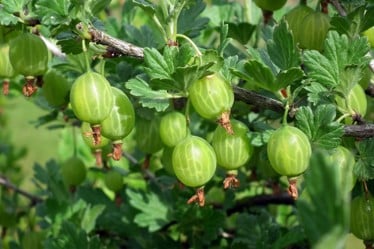
If you have limited space, many soft fruits tolerate summer downpours much better than strawberries (which easily rot in constant wet weather). Gooseberries (pictured), for example, are highly resilient to both extreme UK temperatures and heavy rain.
The Best Trees
Fruit trees which can handle very hot weather and heavy downpours in Cambridgeshire are hardy varieties like apples and pears. If your soil is heavy clay, plant trees on a slight mound or incorporate well-rotted organic matter to prevent roots from rotting during extreme summer deluges.
If you aren’t worried about growing fruit, then excellent tree choices include the field maple and the silver birch. Both thrive in poor-quality soil, and – in the case of the silver birch – the white bark will reflect harsh sunlight, preventing the inner trunk from overheating if the temperature soars.
Lay Down Some Mulch…
Choosing the right plant is only half the battle. Because Cambridgeshire contains a mix of heavy clay, alkaline chalk, and fen peat, how you plant your trees, shrubs or flowers is vitally important.
To give your plants the best possible chance of surviving and thriving in wildly fluctuating weather, apply a 5-7cm layer of mulch around your plants in spring. This traps moisture in the soil during intense heatwaves and insulates roots against winter freezes.
In some cases, it may be better to use coarse sand, horticultural grit or pea gravel rather than a bark mulch to protect your plants. This is because the former will loosen up the native soil and create fast-draining pockets of earth, particularly in clay soils. Bark mulch is an organic top dressing that decomposes and retains moisture.
…and Improve Your Drainage
Digging or tilling wet clay soil destroys its structure, leading to worse compaction. Instead, use a garden fork to carefully aerate any waterlogged patches.
For chronic flooding, consider installing a physical garden drainage system such as a French drain, which directs excess water away from the root zone to a lower point in the garden, or a soakaway. If all else fails, consider building a raised bed where you have more direct control over the quality of the soil.
Mulch and Soil Conditioners from Madingley Mulch
At Madingley Mulch, we offer a variety of composts for our customers in Cambridge and the surrounding area. As well as the various products listed above, we also offer Tony’s Tonic; our own special recipe combining composted horse manure and wood shavings to effectively fertilise your soil. We also offer a spent mushroom compost at our base near Cambridge; this is also highly effective at breaking down heavy clay soil and improving drainage.
If you aren’t sure which type of mulch, soil conditioner or compost you need, then give us a call on 01954 212144 or email us at shop@mulch.co.uk – we will be happy to advise you.
FAQS:
Q: How much mulch am I likely to need for my garden?
A: We have a calculator on our website which will help you work out how much you will require. We recommend laying it to a depth of 75mm (3”) if you are planning a new area, but to a depth of 50mm (2”) or 25mm (1”) if you are topping up an existing area. The calculator can be used for aggregates as well as mulch.
Q: Can Madingley Mulch deliver my order?
A: Yes – we appreciate that mulches and composts are both heavy and bulky. We operate a sliding scale of charges, so how much you will pay depends on how close you live to our base. More details can be found on our deliveries page here. Note that there is a minimum order value of £50 to qualify for delivery.
Q: Will mulch blow away in strong winds?
A: Heavy-grade bark chips and well-rotted organic mulches typically stay put even in gusty weather. For high-exposure gardens, consider decorative stones (such as pebbles or cobbles) as an alternative. While these won’t improve the soil structure, they should stay in position, however strong the wind is.
Back to blog